Autumn Star Anise (秋八角) refers to the primary, premium harvest of the Illicium verum tree,
collected between August and October. Because the fruit has an extended time to
mature on the tree through the warm summer months, it develops thick, fleshy pods and
a significantly higher concentration of essential oils. It is considered the gold standard in
the global spice trade for heavy culinary use and pharmaceutical extraction.
How to Judge Autumn vs. Spring Star Anise
Spring Star Anise (春八角), harvested earlier in the year (typically February to April), has a
much shorter growing period. This results in a spice with very different physical and
aromatic properties.
Here is how you can quickly distinguish between the two:
| Feature | Autumn Star Anise | Spring Star Anise |
| Harvest Time | August – October | February – April |
| Pod Size & Weight | Larger (avg. 2.5 cm), thick, fleshy | Smaller (avg. 2.0 cm), thin, lightweight |
| Shape | Points are fully open, exposing glossy seeds | Points are often tightly closed, shriveled, or empty |
| Color | Deep, rich dark reddish-brown Lighter | pale red to yellowish-brown |
| Aroma | Intense, pungent, deeply sweet licoriceDelicate | light, and slightly floral |
| Market Grade | Premium (Used for whole spice export) | Secondary (Often ground into powder blends) |
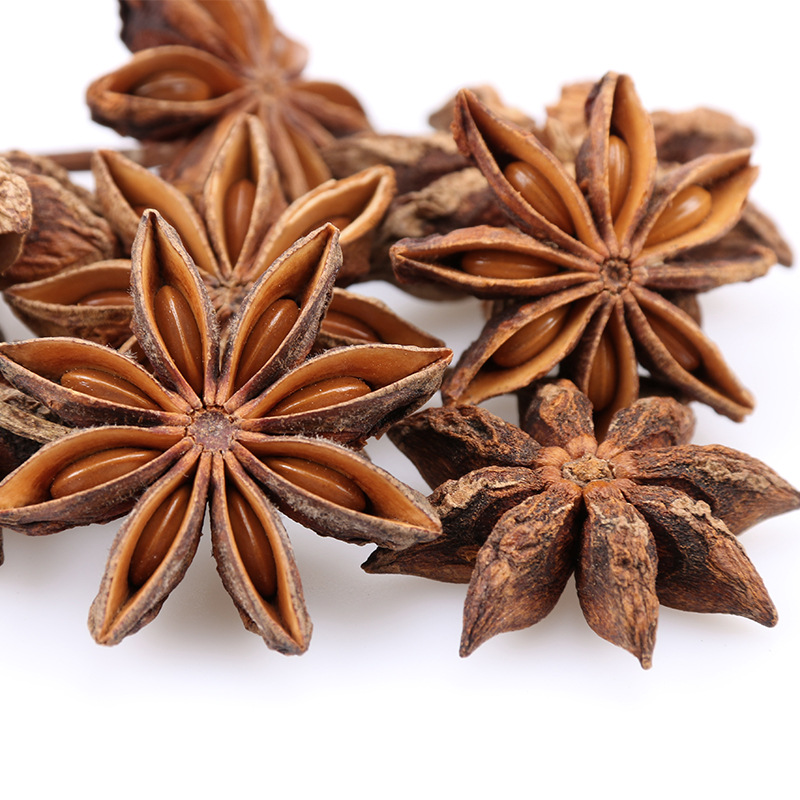
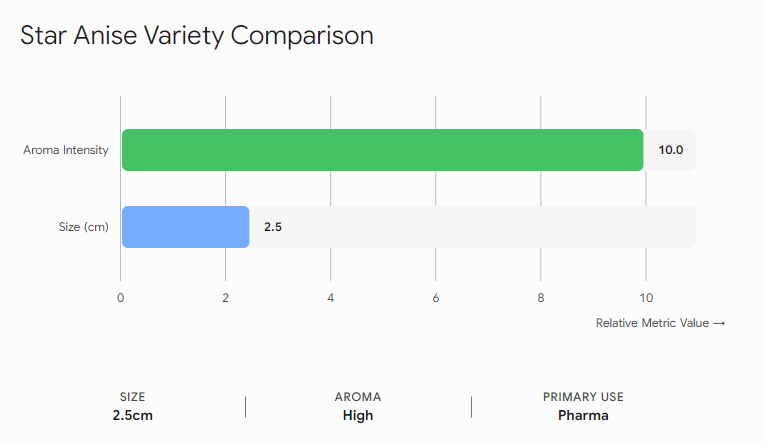
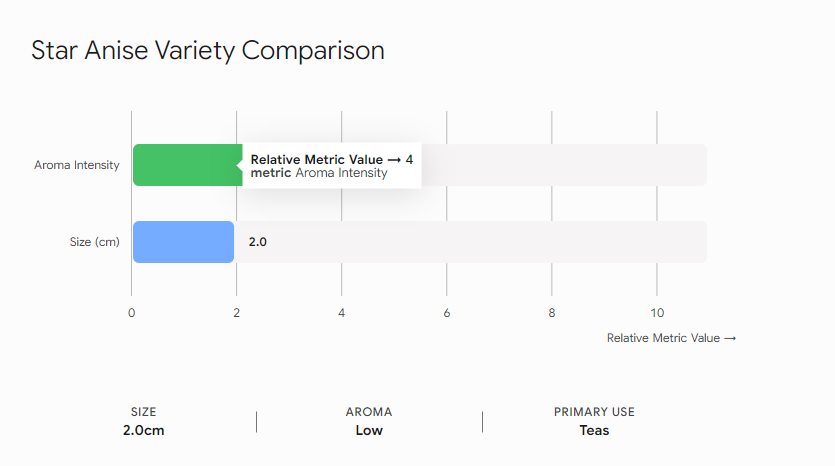
Autumn Star Anise Spring Star Anise
Quality Check: Regardless of the season, high-quality star anise should never look unnaturally bright red or golden-yellow. This artificial coloring usually indicates the spice was improperly dried using sulfur — a practice that ruins the flavor and can pose health risks.