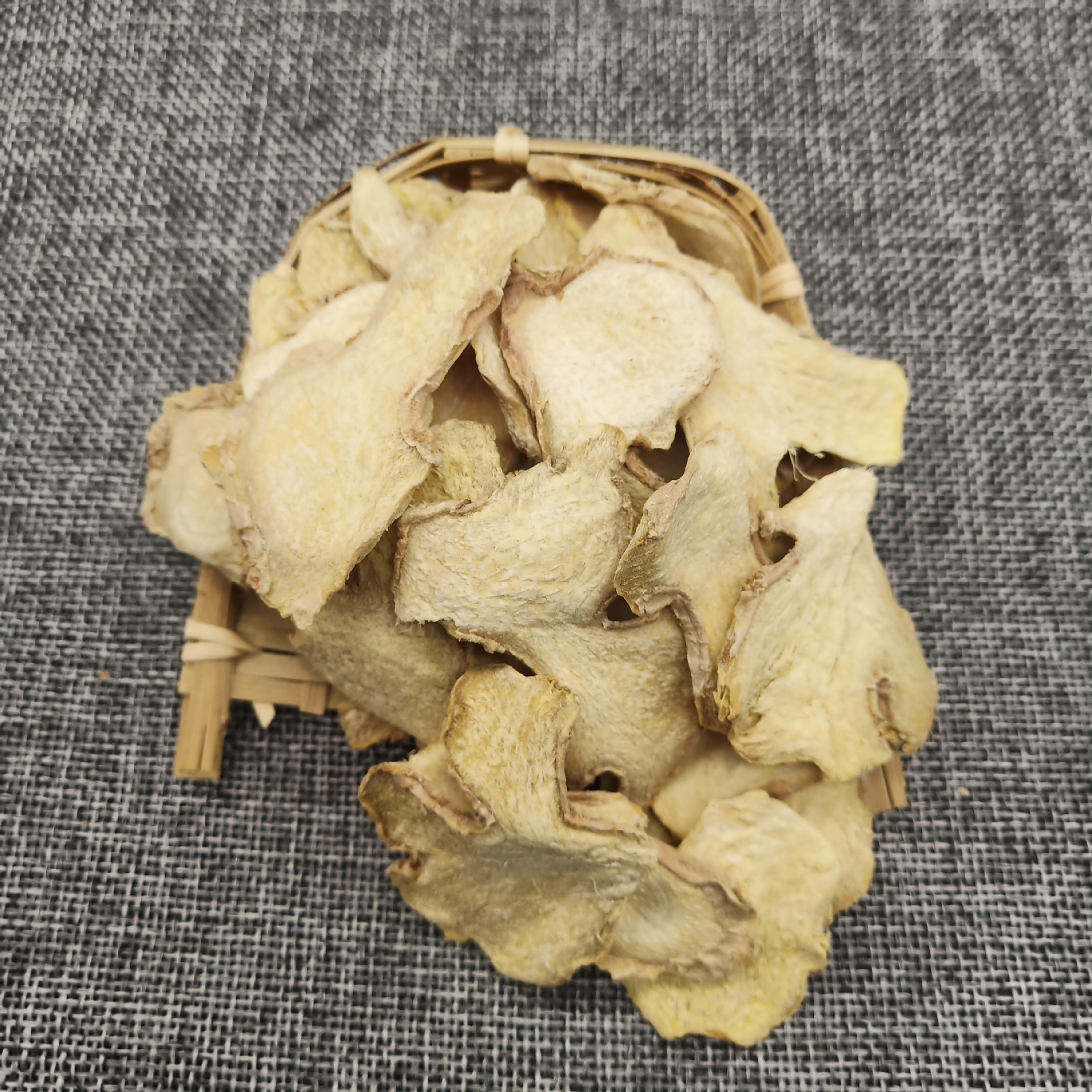
The maturity of fresh ginger at harvest plays a key role in the final color.
Young ginger usually dries to a lighter yellow color with a mild flavor.
Mature ginger often develops a darker yellow or light brown color and has a stronger aroma and higher essential oil content.
For many food manufacturers, mature dried ginger is preferred because of its richer flavor.
The processing method also affects appearance.
Peeled dried ginger has a cleaner and lighter color.
Unpeeled dried ginger retains its natural skin, making the slices appear darker after drying.
Both products are widely accepted in international markets and are selected according to customer requirements.
Drying conditions can significantly influence the final color.
Natural sun drying may produce slight color variations because of changing weather and drying time.
Controlled hot-air drying helps achieve a more consistent color and moisture level.
Excessive heat can cause natural browning reactions, resulting in a darker appearance. Professional manufacturers carefully control drying temperatures to preserve quality.
After ginger is sliced, exposure to air causes natural oxidation. This process may darken the surface slightly before or during drying. Oxidation is a normal reaction and does not necessarily reduce quality or food safety.
Storage also affects color over time.
Factors that may darken dried ginger include:
High humidity
Direct sunlight
High storage temperatures
Poor ventilation
Extended storage periods
Proper storage in a cool, dry environment helps maintain color, aroma, and shelf life.
If dried ginger is not dried to an appropriate moisture level, it may continue to darken during storage. Reliable suppliers carefully control moisture content to improve product stability and extend shelf life.
Professional buyers evaluate dried ginger using several quality indicators rather than color alone:
Strong natural ginger aroma
Clean and hygienic appearance
Uniform slice size
Low moisture content
Minimal impurities
Consistent grading
Compliance with food safety standards
Laboratory testing, such as a Certificate of Analysis (COA)
A darker product with excellent aroma and proper processing may be of higher quality than a lighter product that has poor handling or inconsistent grading.
When sourcing dried ginger in bulk, select a supplier that offers:
Premium raw materials
Modern drying and processing facilities
HACCP and ISO 22000 certification
Certificate of Analysis (COA)
Low and controlled moisture content
Strict quality inspection
Professional export packaging
Stable production capacity
A reliable supplier provides consistent quality, food safety, and dependable international delivery.
Darker dried ginger is not automatically a sign of lower quality. Color differences are usually caused by natural variations in harvest maturity, processing methods, drying conditions, oxidation, and storage. When purchasing dried ginger, buyers should consider aroma, cleanliness, moisture content, consistency, food safety certifications, and supplier reliability rather than judging quality by color alone.