When sourcing agricultural products for global e-commerce, strict quality assessment is the foundation of a reliable supply chain. One of the most critical identification checks for wholesale spice buyers is distinguishing between true Chinese star anise (Illicium verum)Here is the complete SEO metadata set and the finalized content formatted specifically for a B2B or commercial e-commerce website post.
When sourcing agricultural products for commercial food distribution, precise quality control is non-negotiable. One of the most vital distinctions in the global spice trade is separating true Chinese star anise from its nearly identical botanical cousin: Japanese star anise.
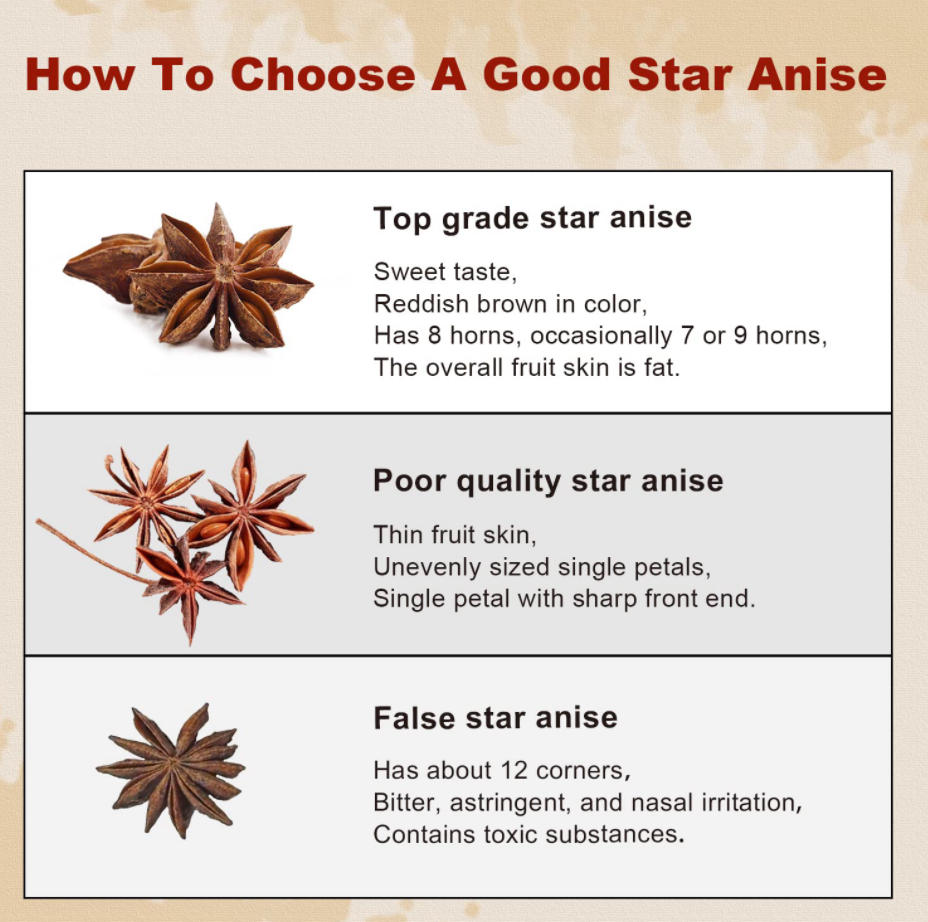
While they look remarkably similar when dried, one is a highly sought-after culinary staple, and the other is dangerous for human consumption. Failing to distinguish the two can lead to severe health risks and compromised supply chains.
The Core Difference: Edible vs. Toxic
| Feature | True Star Anise (Illicium verum) | Japanese Star Anise (Illicium anisatum) |
| Safety Profile | 100% safe and edible | Highly toxic (contains anisatin) |
| Commercial Use | Culinary spice, essential oil, flavorings | Incense production, agricultural pesticide |
| Aromatic Profile | Strong, sweet licorice/anise | Woody, medicinal, similar to camphor |
Japanese star anise contains anisatin, a potent neurotoxin. Ingestion causes severe inflammation of the digestive tract and, in higher doses, can lead to neurological damage. Because the dried pods look almost identical, Japanese star anise is occasionally mixed into commercial batches of culinary star anise, either via poor sorting practices or as an intentional cost-cutting adulterant.
How to Distinguish the Two Pods
To prevent cross-contamination during supplier vetting or batch assessment, procurement teams should rely on these physical and aromatic indicators:
1. Size and PlumpnessTrue Illicium verum pods are generally larger, thicker, and visibly plumper. The toxic Illicium anisatum pods are typically smaller, thinner, and appear more shriveled or fragile when fully dried.
2. The Shape of the Prongs (Follicles)Count the points and inspect the tips. True star anise usually features exactly 8 distinct, robust prongs that form a relatively neat star, with blunt or gently pointed tips. Japanese star anise often has an irregular number of prongs (sometimes up to 13 or 14), and the tips taper into a sharper, slightly curved, hook-like beak.
3. The Aroma TestIf visual differences are too subtle, crush a small piece of the pod. True star anise will instantly release its signature, sweet licorice scent. Japanese star anise will smell distinctly different — more woody, medicinal, or heavily floral, lacking the classic aniseed sweetness.
Securing Your Supply Chain
Relying purely on visual inspection is risky for bulk importers. When establishing relationships with new suppliers, it is highly recommended to request certificates of analysis (COAs) and conduct laboratory testing to screen for anisatin, ensuring your product specifications strictly guarantee 100% pure Illicium verum.